
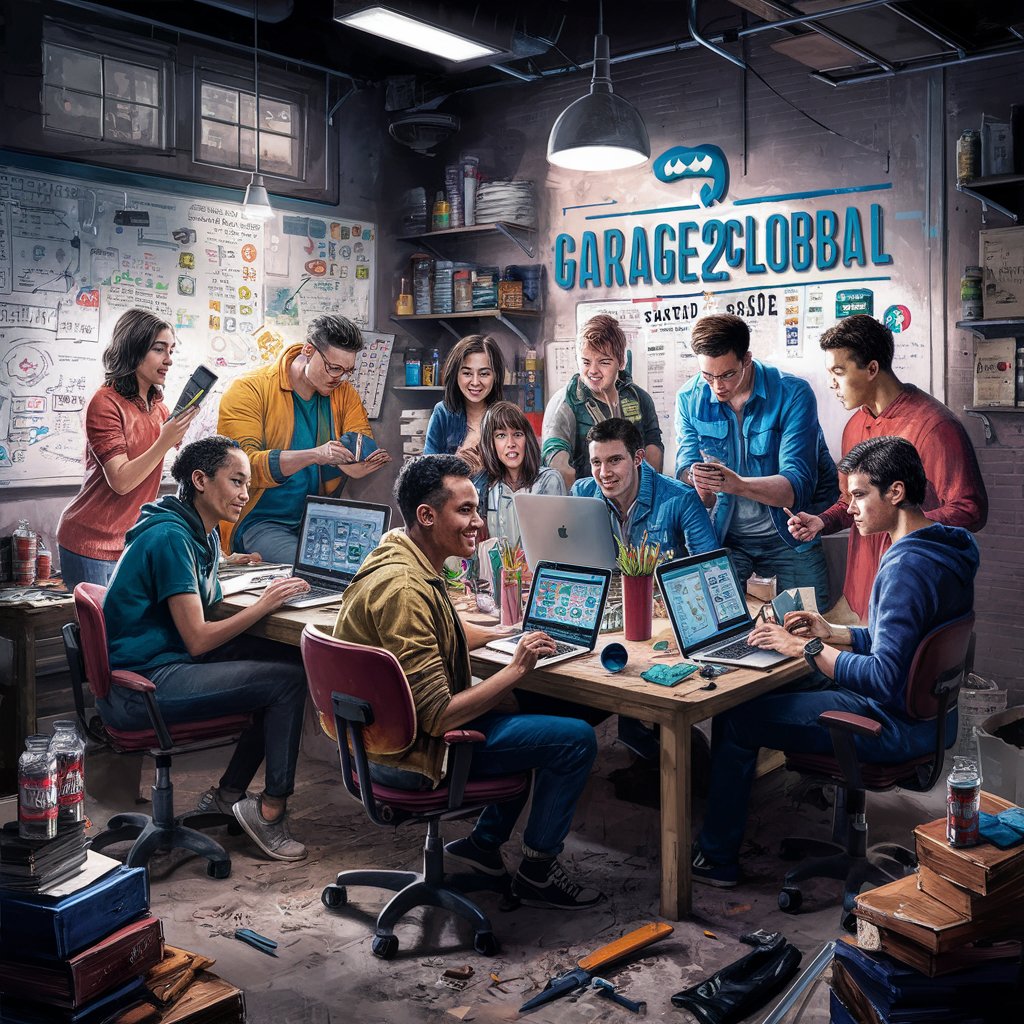
Introduction: From Garage to Global – Building Startup Apps That Scale
For startups, developing a high-quality app can be the difference between obscurity and market dominance—but limited budgets, technical constraints, and scalability challenges often stand in the way. app development for startups with garage2global represents a specialized approach to startup app development, focusing on transforming early-stage ideas into polished, investor-ready products capable of international growth.
Unlike traditional agencies that build apps in rigid phases, the Garage2Global methodology prioritizes lean development, rapid iteration, and scalable architecture from day one. This article explores how startups can leverage this framework to build competitive apps efficiently, covering ideation, MVP development, funding strategies, and global expansion—all while avoiding common pitfalls that derail promising ventures.
1. The Garage2Global Philosophy: Lean Development for Maximum Impact
The Garage2Global approach rethinks conventional app development by combining agile methodologies with startup-specific strategies. Rather than spending months (and excessive capital) on feature-heavy initial releases, it emphasizes validated learning—building only what’s necessary to test core assumptions with real users. Startups begin with a Problem-Solution Fit Workshop,
where ideas are stress-tested against market gaps and user pain points. Technical teams then architect apps using modular components, ensuring that early MVPs can evolve seamlessly into full-scale products. For example, a food-delivery startup might launch with just three restaurant partners and basic ordering functionality, but the backend is designed to support thousands of vendors and AI-driven recommendations later. This philosophy mirrors successes like Dropbox, which started as a minimal viable product before scaling globally.
2. Building Your MVP: Features That Matter (and What to Skip)
A common startup mistake is overloading MVPs with non-essential features, draining resources without validating demand. Garage2Global’s 80/20 Framework identifies the critical 20% of functionality that delivers 80% of user value. For a fintech app, this might mean prioritizing secure transactions and intuitive UI over social sharing integrations. Development follows a three-tier validation system:
-
Tier 1: Core features (e.g., user registration, key functionality)
-
Tier 2: “Delighters” (e.g., push notifications, basic analytics)
-
Tier 3: Future roadmap items (e.g., AI chatbots, multi-language support)
Startups like Calm and Instagram succeeded by nailing Tier 1 first—Calm launched with just a handful of meditation tracks, while Instagram initially omitted even basic filters. Garage2Global’s technical teams use cross-platform tools like Flutter or React Native to build MVPs 30–50% faster, with cloud backends (AWS/Azure) pre-configured for scaling.
3. Funding Your App: Garage2Global’s Investor-Ready Approach
Most startups fail to secure funding because they can’t demonstrate traction or technical scalability. Garage2Global addresses this by baking investor metrics into development:
-
Embedded Analytics: Track user retention, engagement, and conversion from day one.
-
Scalability Proof: Use serverless architectures (e.g., Firebase) to show cost-efficient growth potential.
-
Pitch-Ready Prototypes: Build interactive demos that highlight unique value propositions.
Case in point: A healthtech startup using this methodology attracted seed funding by proving 40% weekly user growth with an MVP that cost under $15K to develop. The Garage2Global team also connects founders with its Angel Network—investors who specialize in early-stage tech ventures.
4. Going Global: Localization and Scalability from the Start
Many apps fail when expanding internationally due to poor infrastructure or cultural misalignment. Garage2Global’s Pre-Scaled Architecture avoids this by:
-
Designing UI/UX with localization in mind (e.g., text expansion space, RTL support)
-
Using geo-distributed CDNs (Cloudflare, Akamai) to ensure low-latency performance worldwide
-
Integrating multi-currency/payment systems (Stripe, PayPal) during MVP phase
A travel startup following this model launched in 3 countries within 6 months by pre-loading localization keys and using dynamic content loading. Garage2Global’s Partnership Toolkit further helps startups navigate legal compliance (GDPR, CCPA) and app store optimization (ASO) for global markets.
5. Success Stories: Startups That Scaled with Garage2Global
-
EduPlay (EdTech): Raised $2M Series A after launching an MVP with just 5 educational games, built in 8 weeks. Their pre-scaled backend now supports 500K users.
-
GreenCart (Sustainability): Expanded to Europe within 4 months using Garage2Global’s localization templates, achieving 70% lower development costs vs. competitors.
Conclusion: Why Garage2Global Works for Startups
Traditional app development often bankrupts startups before they validate their ideas. Garage2Global’s methodology de-risks the process by aligning technical execution with business growth—building just enough to learn, then scaling intelligently. For founders, this means:
✅ Faster time-to-market (6–10 weeks for MVPs)
✅ 40–60% cost savings vs. conventional development
✅ Built-in scalability for global reach
Startups ready to transition from garage dreams to global platforms should prioritize flexibility over perfection—and Garage2Global provides the blueprint to make it happen.
